
When two clients asked me to help with flights for a San Francisco half marathon, the plan was simple: two runners, one weekend. The award price changed the trip—seven people went, and race weekend became a weeklong family vacation.
The search: the same flights, two prices
In May, I helped the two runners evaluate roundtrip United economy flights from St. Louis to San Francisco for the last week of July. Their race fell on the July 25–26 weekend, so the itinerary had to work around an event they could not move.
United offered the exact same flights in two ways:
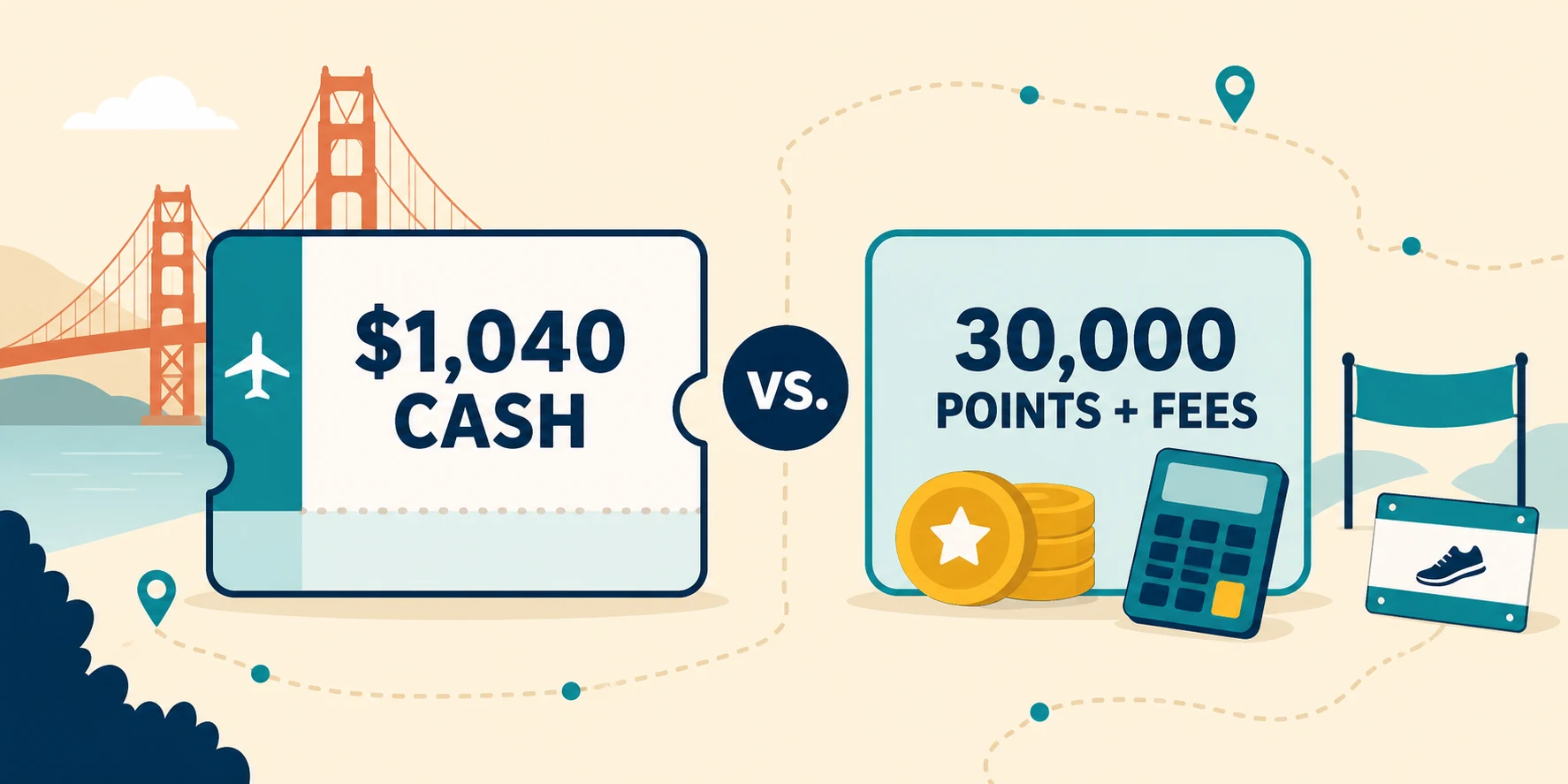
Cash: $1,040 roundtrip per traveler
Miles: 30,000 United miles plus $11.20 roundtrip per traveler
That apples-to-apples comparison mattered. The award did not require them to accept a worse schedule, a different cabin, or extra stops to save cash. The real decision was whether preserving cash now was worth using miles they could otherwise keep for a future trip.
I showed them both the per-person comparison and what it would mean at the group level. They made the final decision and completed the bookings from their own United accounts.
The math was strong
For one traveler, the fee-adjusted value was:
($1,040 cash fare − $11.20 award taxes and fees) ÷ 30,000 miles × 100 = 3.43 cents per mile
| Travelers | Cash price | Award price |
|---|---|---|
| One | $1,040 | 30,000 miles + $11.20 |
| Seven | $7,280 | 210,000 miles + $78.40 |
The group calculation leads to the same rate because every traveler had the same price. But the totals make the practical effect much clearer: the families could replace $7,280 of airfare with 210,000 miles and $78.40 in required fees.
I would not call the entire difference “free travel” or pure savings. The miles had value and could have been used later. What the redemption did was keep $7,201.60 of additional cash airfare outlay from hitting the families’ budgets for this trip.
That distinction is central to the whole-trip approach to cents per point. The calculation is useful, but the best choice depends on what the currency makes possible.
How two race tickets became seven family tickets
At the cash price, only the two runners planned to travel. Paying $2,080 for their two tickets was already a meaningful expense, and adding five relatives would have pushed airfare alone to $7,280.
The award price changed that conversation. One runner’s party grew to four travelers; the other grew to three.
| Family party | Cash price for the same flights | What they booked instead |
|---|---|---|
| Four travelers | $4,160 | 120,000 miles + $44.80 |
| Three travelers | $3,120 | 90,000 miles + $33.60 |
| Total: seven travelers | $7,280 | 210,000 miles + $78.40 |
Instead of a quick trip for two runners, the booking became a weeklong vacation for both families during the last week of July. That was the outcome I wanted the comparison to reveal. A strong redemption is not only a high value on paper; it can expand who gets to go and what the trip becomes.
Where their United miles came from
The travelers already had United miles earned through a combination of regular flying and a welcome bonus from the United℠ Explorer Card[1].
A welcome bonus can help build a useful balance, but it is not worth overspending, carrying interest, or choosing a card that does not fit your normal spending and travel plans. In this case, the miles were already available and had a clear job.
Why I recommended using miles
Three facts made the points option fit:
- The flights were identical. There was no schedule or cabin sacrifice hidden behind the lower cash cost.
- The fee-adjusted math was compelling. The real result was 3.43 cents per mile after required fees, not a headline number that ignored cash at checkout.
- The miles changed the trip. Using them let both runners bring their families without taking on thousands of dollars in additional airfare.
That does not make 3.43 cents per mile a universal threshold. Cash could still be the better choice if a traveler needs those miles for a more important near-term trip, cannot find enough award seats, or receives meaningful value from a paid fare that an award would not provide.
Award availability can also change while someone decides. In this case, I helped the clients evaluate the live options and act on a comparison that fit their priorities; I did not promise that the same price would remain or that another traveler could reproduce it.
Apply the same test to your trip
When cash and miles compete, use four questions:
- Are these truly the same trip? Match flights, dates, airports, cabin, travelers, bags, and other required costs.
- What is the net value? Subtract award taxes and fees from the comparable cash price before dividing by the miles used.
- What does each option protect? Paying cash preserves miles; using miles preserves cash.
- What changes because of the choice? Look beyond the ratio to the people, time, and experiences the decision makes possible.
Before searching, organize dates, traveler details, airport options, and balances in an award-flight search brief. Better inputs make the comparison faster and more honest.
For these two runners, the answer was not simply “30,000 is less than $1,040.” It was that 210,000 miles and $78.40 could turn a race weekend for two into a family vacation for seven on the same flights. If you want help comparing your real options, an Award Travel Strategy Call can turn the numbers into a practical booking path.
1. Referral disclosure: If you apply through the card link and are approved, I may receive referral rewards from Chase. Card offers and terms can change, so review the current application details before deciding.